10 Content Strategies to Leave Behind in 2026
It’s 2026, and people still don’t understand content. I started my career in Content Marketing seven years ago, and I’ve remained baffled by how content is treated. The philosophy I always see is:
- We know that content is important.
- But we don’t have time to plan anything out.
- And we generally don’t want to spend a lot of time or money on it.
- And we want you to produce more than ever before.
Let’s readjust this thinking. When you’re developing a strategy, answer these questions:
- What do you have to say that is actually worth saying?
- Are you just regurgitating what other businesses are saying?
- Do you have actual insight that is beneficial to potential buyers, including those just starting their journey?
If you can’t answer these questions, it’s time to re-evaluate your existing strategy. As you’re re-evaluating your content roadmap, I want to highlight some strategies that I absolutely detest and believe have no place in 2026.
1. Ignoring Informational Content Because of AI Overviews
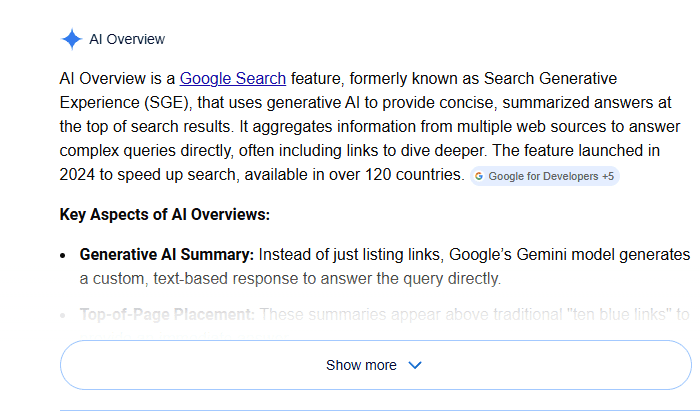
AI, AI, AI! Who knew that two letters could be so obnoxious? Don’t get me wrong, I don’t dislike AI, and I (insert gasp) do use it every day to some extent. However, what I’ve seen toward the tail-end of 2025, leading into this year, is companies totally ditching informational content because AI Overviews exist.
Do we know how long AI Overviews will continue to exist? Do we know how long they will dominate the search engine? We really don’t. The SEO world is just making guesses, and search engines are going to do what they want (or at least the team behind big name search engines are going to do what they want).
Create content for every funnel, including top, mid, and bottom. All of it is important. You need resources on your website that help buyers or decision-makers understand which solution(s) they need, content that highlights your brand, and specific information about your products and services to help them make better decisions.
Yes, build your case studies, write your press releases, but don’t forget that informational content still has a place—building authority (side note: I am a human writer and used an em dash. Deal with it). If you want to show your expertise, then write about it. Show your audience that you know what you’re talking about.
2. Emphasizing Quantity Over Quality
“So, why don’t you just use AI to generate a bunch of content?”
If I hear or read this sentence one more time, I may pull out all of my hair. You want to know why I don’t do this?
Because quantity doesn’t matter. If you ask me, “How much content should I post?” I am going to respond with “What do you have that’s worth saying?” If you don’t have anything to talk about, don’t talk.
No, this doesn’t mean content isn’t important. It is. Posting content every now and then will help improve online visibility, but there isn’t a special-secret number of posts you can make that will unlock Google’s secrets and propel you to position one.
Please, for the sake of my hair, focus on what you’re writing versus how much you want to write.
3. Using Black Hat Techniques to Improve AI Visibility
AI is susceptible to black hat techniques, which could include:
- Keyword stuffing in content (Are you looking for a ROOFING COMPANY NEAR ME? If you’re looking for a roofing company near me, [insert business name] is here to help.”
- Creating listicles that show your company at the top (e.g., 8 Best Roofing Companies in Utica, Michigan).
So, what if you just…do that? They’ve been proven to work; what could go wrong?
Good job, you now appear in an AI Overview. How long do you think it will last? 3 months? 6 months? Two weeks?
Featured snippets, AI Overviews. All of it is fleeting. Appearing in them is helpful, but how often do you want to update your content? Is showing up in a ChatGPT search more important than appearing in organic search, even though reports continue to show that people still favor traditional search engines? What happens when LLMs reward your black-hat strategies, while search engines penalize you?
I know we live in a society that values short-term thinking, but SEO is about the long term, and I’d like to keep it that way.
4. Not Having a Strategy At All
I’m going to be honest: this is the boat most businesses are in, whether it’s due to a lack of internal resources, failing to understand digital marketing, or simply not caring and falling into the “I have to do it, so I’m just going to do it” category.
When you’re developing a strategy, think about:
- What products and services (offered by your business) are most important to you?
- What do you bring to the table, honestly? Every company says they offer quality and great support. Can you prove it?
- There are lots of buyers, but which ones do you prefer?
- Do you know what types of problems or challenges these buyers typically experience?
- How can your brand specifically help them overcome these problems or challenges?
- How does your preferred audience consume content? Is it mostly video format, articles, interactive quizzes, infographics, etc.?
- Where will you be posting/distributing your content?
- Is that really the best way to reach your intended audience?
5. Focusing on One Channel
The world is your oyster. Why limit yourself to one channel? Highlight which content pieces, or variations of content pieces, will be posted on social media accounts (you need them, whether you like it or not), your Google Business Profile, newsletter, press release/newspaper, website, etc. If you want to improve brand awareness, you could also sponsor an event or agree to a public speaking opportunity. You could even participate in an interview on the local news or on a podcast.
6. Failing to Understand Your Audience
The people visiting your website aren’t anonymous avatars or Russian bots (well, maybe some are). They’re real people with real lives, real problems, and real needs. If you don’t take the time to learn more about them, they’re not going to take the time to learn about you.
Think about some of the most recent marketing failures that have made the headlines. For example, the It Ends With Us debacle, where Ryan Reynolds and Blake Lively attempted a humorous campaign that missed the mark, completely isolating the movie’s main audience: survivors of domestic violence. And let’s not even talk about the “She’s Got Good Jeans” Sydney Sweeney advertisement that became a hot topic on my LinkedIn feed for weeks.
The point here is that your audience isn’t stupid. If your content misses the mark, they’ll let you know, either through visceral tweets or by ignoring your brand entirely.
7. Forgetting About Content Freshness
“Why aren’t we getting something new?” is a question I wish I could never hear again. What’s the point of creating new content when there’s an entire archive of existing content that could be refreshed? It takes less time (usually), it doesn’t cost as much money, it can improve the usefulness of the content, and it reduces the risk of you writing the same content over and over again…what’s not to love about that?
Look back at your old content and consider how it can be improved or updated to remain relevant to your audience.
8. Ignoring Content Design

I recently attended a webinar where it was mentioned that content chunking, or shortening paragraphs, doesn’t matter much for improving AI visibility…but I don’t care about that. How does it affect the reader?
Content design matters. Your content should:
- Be straightforward (I am wordy, I recognize that about myself. Not everybody enjoys it).
- Feature headlines that make sense and accurately set expectations (nobody actually likes clickbait, even if it does work).
- Flow naturally from one section to the next.
- Comprehensively cover the topic you’re writing about.
- Be broken up into shorter sections (yes!) because if people wanted to read giant walls of text, they could just open up Moby Dick.
9. Not Giving Any Thought to Your Brand
Who are you, really? If you don’t know, your audience certainly isn’t going to. A lot of businesses, especially startups, run into the industry head-on like they’re trying to get to the Hogwarts Express on time. When businesses do that, they struggle to build themselves up as industry leaders, resulting in business restructuring, rebranding, and other re-s that are annoying for any digital marketer to deal with.
It’s exciting to start a new venture, but really think about what you offer that other brands in your industry don’t. Think about how Claude is standing out in a sea of other LLMs with their new Ads are coming to AI, but not to Claude strategy. It’s self-aware and humorous while simultaneously dissing other AI platforms, which audiences are all too keen to get behind. Claude knows what they’re doing, and they’re taking the “We’re not like other AI companies” path. That’s their brand. What’s yours?
10. Not Telling the Full Story
Marketer: So, we’re going to write an article comparing some of the different plastic processing methods.
Client: Okay, but make sure to focus only on injection molding, since that’s all we do
I don’t know how many times I’ve been on the marketer’s side of this conversation. I understand that for relevancy, it seems odd to talk about something that your business doesn’t offer, but think of it this way:
Not every customer starts their journey understanding exactly what they need. An article like this could help compare the best use cases for each method and any limitations. If your method is wrong for a specific project, do you really want people contacting you for help with that project? It’s a lead, but it’s a wasted lead. Creating content like this helps customers understand when your solution is the right one, and when they should go elsewhere.
What’s Your 2026 Content Marketing Strategy Look Like?
If anything, I hope this article reminded you of the importance of just sitting down and brainstorming. In a fast-paced world, sometimes we just need to slow down and observe. You want success, so figure out how to achieve it. Although pop star narratives will have you believe it’s easy to stumble into success, most stories don’t share the years of hard work it took to get to that point.
Marketing your business isn’t easy; it takes a lot of resources, and at times, it’s honestly not fun. Instead of hoping you’ll fall into better visibility, partner with an agency that can help you get there. If you need a little Momentum, contact us today to get started with a free discovery call. We can help you redesign your website and develop a long-term digital marketing strategy.